From Anxious to Empowered: How Smart Security Gave Me Back My Peace of Mind
Imagine lying in bed, heart racing, wondering if you remembered to lock the front door. I used to live like that—constantly worried about my family’s safety. Then I discovered smart security devices that didn’t just protect my home, but transformed how I felt inside it. No more second-guessing. No more stress. Just quiet confidence. This isn’t about high-tech obsession—it’s about creating a safer, calmer life for the people you love. It’s about walking into your house and breathing deeply, knowing everything is as it should be. And honestly? That kind of peace is worth more than any gadget on its own.
The Little Worries That Took Over My Life
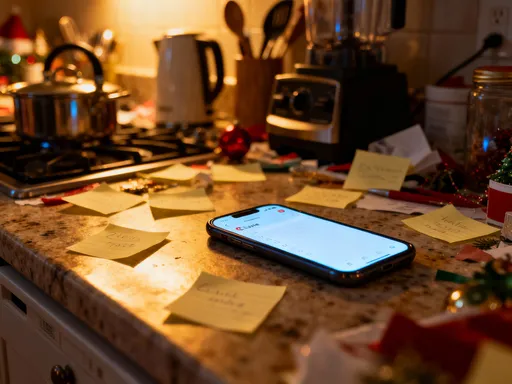
I remember one rainy Tuesday, I was already halfway to my daughter’s piano recital when my stomach dropped. Did I lock the front door? I couldn’t remember. Just like that, my calm afternoon unraveled. I turned the car around, drove back in the downpour, and raced up the porch steps—only to find the door firmly locked. Of course it was. But that didn’t stop the guilt, the frustration, the sheer exhaustion of it all. How many times had I done this? How many moments stolen from my day, my focus, my joy—all because of a simple, nagging doubt?
That was just one moment, but it represented a pattern. For years, small fears lived in the corners of my mind like uninvited guests. Was the garage door closed? Did I arm the alarm? What if someone was in the house when the kids got home from school? I wasn’t paranoid—I was a mom, a homeowner, someone who cared deeply about keeping her family safe. But the weight of constant vigilance started to wear me down. I’d lie awake at night replaying the day’s routines. I’d snap at my husband over little things because I was already running on frayed nerves. The irony? I was trying to protect my family, but the stress was making me less present, less patient, less peaceful.
What I didn’t realize then was that these tiny worries weren’t just annoyances—they were quietly eroding my sense of safety and control. And I know I’m not alone. So many women I talk to—mothers, caregivers, partners—carry the same invisible load. We’re the ones who remember to check the smoke detectors, who notice if a window is slightly ajar, who feel responsible for the quiet hum of a well-protected home. But should that responsibility come at the cost of our own calm? I started to wonder: what if there was a way to protect my family without sacrificing my peace of mind?
Discovering a Smarter Way to Feel Safe
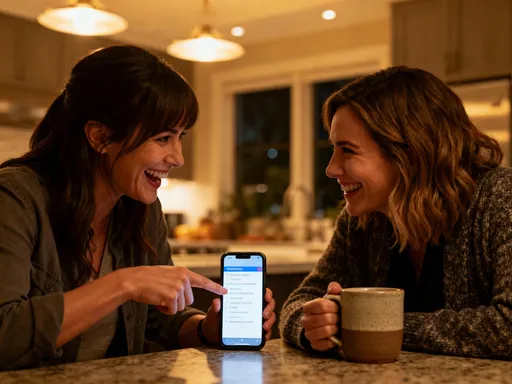
The shift started with a simple conversation. My friend Lisa mentioned she’d installed a smart lock on her front door. “I can check it from my phone,” she said casually, like it was no big deal. At the time, I thought it sounded a little futuristic—maybe even unnecessary. But that night, after another round of mental door-checking, I Googled it. The next week, I ordered one.
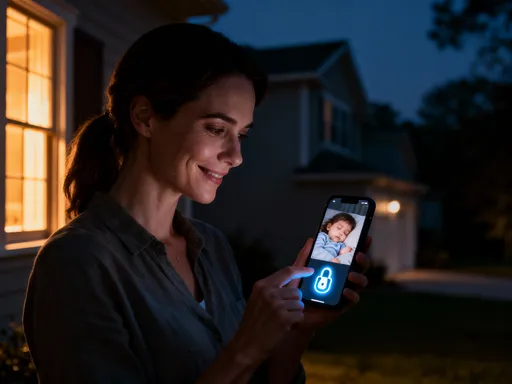
Setting it up was easier than I expected. Within an hour, I had replaced our old deadbolt with a sleek new lock that connected to our home Wi-Fi. I downloaded the app, followed the step-by-step guide, and just like that, I could see the lock’s status from anywhere. Was it locked? Yes. Was it unlocked? I’d get a notification. The first time I opened the app while sitting in my car at the grocery store and saw that the door was secure, I actually exhaled. It was such a small thing—but it felt like a weight had lifted.
That’s when it hit me: this wasn’t about fancy tech or showing off. It was about trust. Trust that the door was locked. Trust that I didn’t have to drive back. Trust that I could focus on my daughter’s recital, my meeting at work, my coffee with a friend—without that nagging voice in my head. The lock didn’t just secure the house; it secured my confidence. And once I felt that, I started wondering—what else could make me feel this calm? What other parts of my home could I trust a little more?
That one little device opened the door—literally and figuratively—to a whole new way of living. I wasn’t becoming obsessed with gadgets. I was reclaiming my attention, my energy, my emotional space. And honestly, that felt like a gift.
Seeing Is Believing: The Power of Real-Time Cameras
If the smart lock gave me peace of mind, the cameras gave me proof. I’ll admit, I was hesitant at first. I didn’t want to feel like I was spying on my own home. But after talking to a few other moms who used indoor and outdoor cameras, I realized it wasn’t about surveillance—it was about connection and clarity.
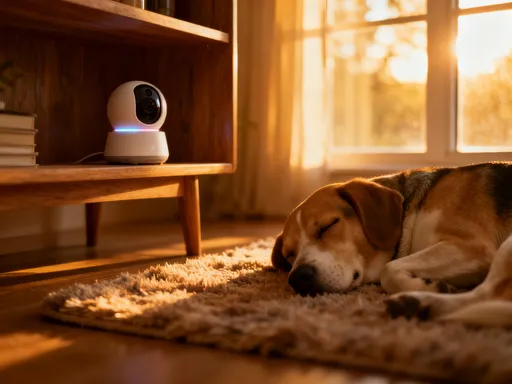
I started with one indoor camera in the living room, mostly to keep an eye on our dog, Luna, when I was at work. The first time I opened the app during a meeting and saw her curled up on the couch, snoring softly, I smiled so wide my coworkers noticed. It wasn’t just cute—it was comforting. I wasn’t worrying about her barking at the mailman or chewing a shoe. I knew she was safe, calm, and content. That small window into my home became a quiet anchor in my day.
Then came the moment that proved the system was more than just a comfort—it was protection. It was a Friday afternoon, and I was helping my son with homework when a notification popped up: motion detected at the front door. I tapped the app and saw a stranger on my porch, grabbing a package from the steps. I watched, stunned, as he turned and walked away. I called the police immediately, shared the video, and within an hour, they’d recovered the package. The officer said the footage was crystal clear—there was no doubt who did it.
That experience changed everything. It wasn’t just about catching a thief. It was about knowing I could protect my home, even when I wasn’t there. It was about feeling capable, not helpless. And it wasn’t just for break-ins. When my teens started coming home from school before I got off work, I could check in—just a quick glance to see them walking in safely, dropping their backpacks, maybe grabbing a snack. No need to call and interrupt their space. Just a silent, reassuring look that everything was okay.
The cameras didn’t make me more anxious—they made me calmer. Because now, instead of imagining the worst, I could see the truth. And that made all the difference.
Alerts That Actually Help—Not Just Annoy
One of my biggest fears about smart security was becoming overwhelmed by notifications. I didn’t want my phone blowing up with every little motion—birds in the yard, the wind rustling the trees, my neighbor’s cat sneaking through the garden. That kind of noise would only add to my stress, not reduce it.
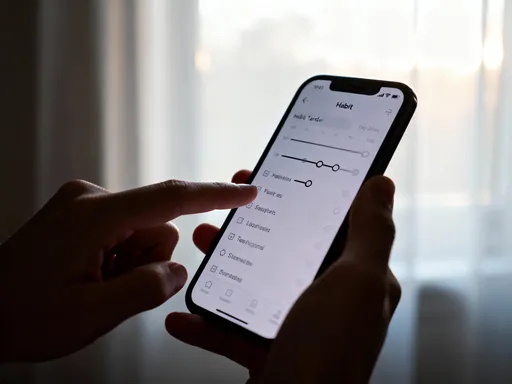
Thankfully, modern systems are smart enough to be customized. I spent an afternoon in the app, fine-tuning the alerts. I turned off motion detection for the front yard during the day—too many false alarms from delivery trucks and passing kids on bikes. But I kept it on for the back door, especially after dark. I set up alerts for when doors opened or closed, but only during certain hours. And I made sure I got a notification if motion was detected inside the house when the system was armed.
The result? Fewer alerts—but the ones I got actually mattered. I remember one evening, I was folding laundry when my phone buzzed: motion detected near the back door. It was 9:15 PM. No one should be out there. I opened the app, switched to the backyard camera, and saw a shadow moving along the fence. I couldn’t make out who it was, but something felt off. I turned on the outdoor lights through the app and called my husband to check. He grabbed a flashlight and went outside—no one was there. But the point was, we were alerted. We were ready. And the system had done its job.
That night, I realized how powerful it was to have a system that worked with me, not against me. It wasn’t shouting at me with every little thing. It was whispering when it needed to. It was like having a quiet guardian who only speaks up when something’s truly important. And that kind of support? That’s what makes technology feel human.
Customization is key. Take the time to set up your alerts the way your life works. Because when your smart security respects your routine, it doesn’t add to your mental load—it lifts it.
Helping Kids Feel Safe, Not Watched
When I first mentioned adding cameras to the house, my teenage daughter gave me *the look*. You know the one—the mix of suspicion and eye roll that says, “Mom, are you seriously going to spy on me?” I totally get it. Privacy matters, especially for kids who are learning to be independent. I didn’t want my efforts to protect them to make them feel mistrusted.
So instead of installing everything in secret, I brought them into the conversation. We talked about why I wanted the cameras—not to monitor their every move, but to make sure they were safe when they came home alone, to catch any real threats, and to give me peace of mind so I wouldn’t call ten times in an hour. We agreed on boundaries: no cameras in bedrooms or bathrooms, of course. The living room, kitchen, and front porch? Okay. The backyard gate? Yes, because it’s a potential entry point.
We even tested the two-way audio feature together. I was in the kitchen, she was upstairs. I used the app to say, “Hey, dinner’s almost ready.” She answered, “Okay, Mom,” and laughed. “That’s actually kind of cool,” she admitted. It wasn’t creepy—it was convenient. Now, if I hear the door close and I’m not sure who’s home, I can gently say, “Is that you, sweetie?” instead of yelling up the stairs or marching down the hall. It’s a small thing, but it keeps the peace—literally.
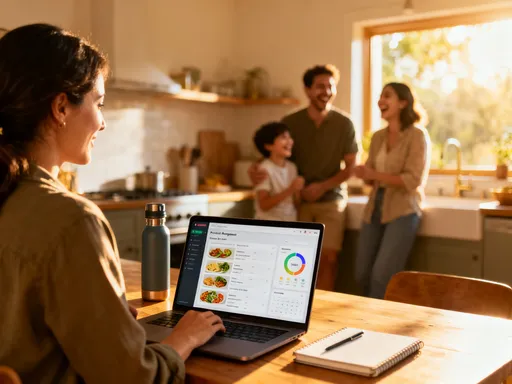
The truth is, this technology doesn’t have to create distance. When used with respect and honesty, it can actually bring families closer. It gives us a way to care without hovering. To check in without interrupting. To protect without controlling. And for my teens? Knowing the house is secure means they feel safer, too. That confidence—that sense of being looked after—is something we all want for our kids.
Building a Routine Around Security, Without Thinking
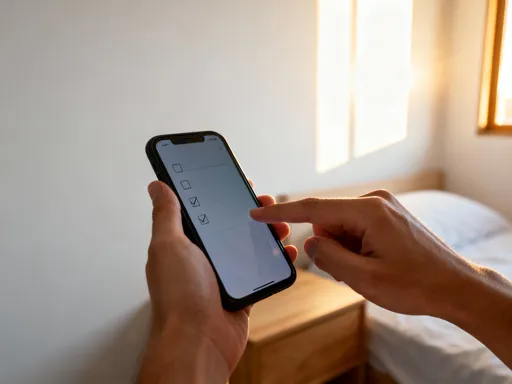
One of the most freeing parts of smart security isn’t the alerts or the cameras—it’s the automation. I used to spend so much mental energy remembering to do things: lock the doors, turn off the lights, arm the system. Now, I don’t have to. I created a “Goodnight” routine in the app, and with one tap, everything happens at once.
When I say “Goodnight,” the smart lock secures the front door, the garage door closes, the indoor lights turn off, the outdoor lights come on, and the security system arms itself. I don’t have to walk through the house, checking each room. I don’t have to wonder if I forgot something. It just… happens. And that small shift has made a huge difference in how I feel at the end of the day.
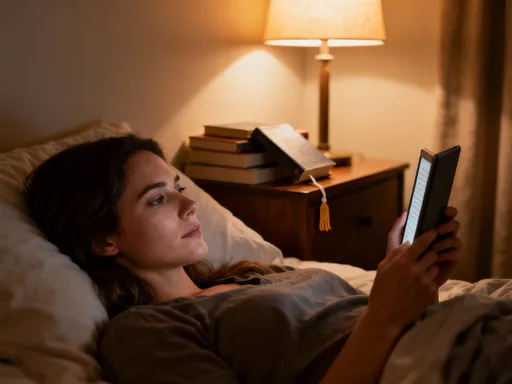
There’s something deeply comforting about knowing the house is taken care of. It’s not that I’ve become lazy—I’ve become liberated. My brain isn’t cluttered with “Did I…?” questions. I can tuck my kids in, read a book, or just sit quietly, knowing the system is watching over things. That mental space? It’s priceless. I’m more present. I’m more patient. I’m more at ease.
And it’s not just at night. In the morning, I have a “Leaving” routine. I tap it on my phone, and the thermostat adjusts, the lights turn off, and the locks engage. I walk out the door without a second thought. No double-checking. No anxiety. Just freedom.
That’s the real magic of smart home tech—not the gadgets themselves, but what they give back to you. Time. Calm. Presence. When your home takes care of the little things, you can focus on the big things—like your family, your dreams, your life.
A Home That Protects, So You Can Truly Live
Looking back, I realize how much of my energy used to go toward managing fear. Fear of forgetting. Fear of the unknown. Fear of something happening when I wasn’t there. I was so focused on protecting my family that I forgot to protect my own peace. But smart security didn’t just change how I lock my doors—it changed how I live in my home.
Now, when I walk in, I don’t scan the room for signs of trouble. I breathe. I smile. I say hello to Luna, who’s probably napping in her favorite spot. I call out to the kids, or pour a glass of water, or just stand in the quiet for a moment. That stillness—that sense of safety—is something I used to take for granted. Now, I cherish it.
This journey wasn’t about fear. It was about freedom. Freedom from doubt. Freedom from stress. Freedom to be fully present with the people I love. And that’s the real promise of smart security: it doesn’t make your home colder or more clinical. It makes it warmer, safer, more alive.
I’m not saying technology fixes everything. No device can replace love, connection, or good communication. But when used with intention, smart security can support all of those things. It can give you the confidence to relax. The space to breathe. The peace to just be.
So if you’re still lying in bed, wondering if you locked the door, I want you to imagine something different. Imagine checking your phone and seeing that everything is secure. Imagine watching your dog sleep peacefully on camera. Imagine getting an alert that helps you prevent a problem before it happens. Imagine going through your day without that background hum of worry.
That calm is possible. That confidence is within reach. And it’s not about becoming a tech expert—it’s about becoming the calm, capable, centered version of yourself that your family already knows you are. Your home should protect you. And with a little smarter peace of mind, it can.”